Stiff Neck, Tight Shoulders?
30 days to Relieve All That Interpreter Tension

Learn How to Keep It From Building Back Up
A 30-day, whole-body yoga program created specifically for interpreters to relieve neck and shoulder tension, restore mobility, build strength and help your body recover from the unique demands of the work.
A progressive program created by an interpreter who understands what your body needs.
Why Does The Tension Keep Coming Back?
Relief is important. But if you only address the symptoms, you can easily end up back in the same cycle.
You must know when and how to mobilize, strengthen, and most importantly, restore your body so it can recover and heal.
Your Body Is Too Important for a One-Size-Fits-All Yoga Class.
A general yoga class was not designed with your body in mind.
This course was.
In many yoga classes, you may be asked to immediately bear weight on shoulders and wrists that are already tight, overworked or not yet prepared for the load.
Each class intentionally combines:
Mobility to reduce stiffness and improve how your shoulders, spine and upper body move.
Strength to build the support and resilience your body needs for repetitive work.
Rest and restoration to help your body release accumulated tension and recover.
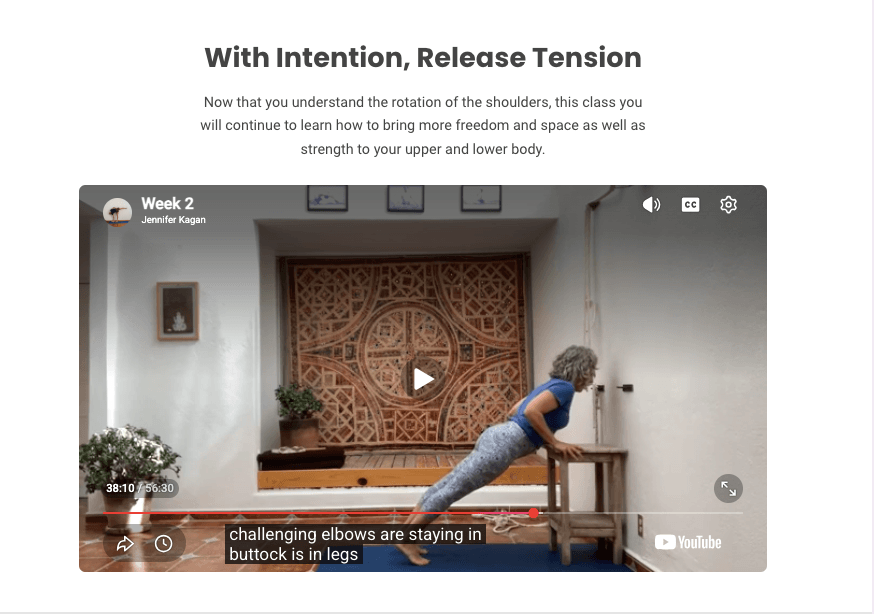
This is a progressive program created by an interpreter, for interpreters, to counteract what interpreting does to your body and build your resiliency to keep doing what you love.
Yoga Is More Than Stretching
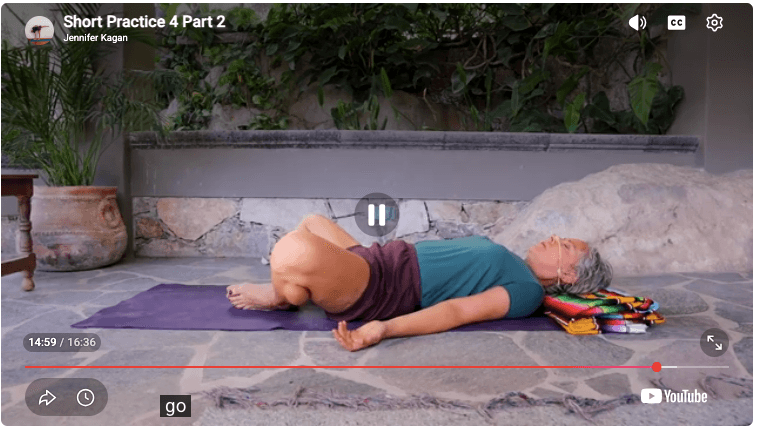
We all need to move, stretch and build strength. But yoga works on more than muscles.
Through movement, breath and attention, yoga connects the physical, mental, emotional and energetic layers of you.
You can be strong and still hold enormous tension. You can go to the gym regularly and still not know how to relax, recover or recognize what your body needs.
Yoga teaches your whole system to move, respond and recover differently.
The Yoga Course Designed For You
What you learn:
Begin by creating more mobility in the shoulder joint and surrounding areas so your arms can move with greater freedom and less unnecessary effort.
Why this matters for interpreters:
Your shoulders are moving and working for hours, often within the same limited range. Before asking them to do more—especially strengthening or weight-bearing work—we first create space and improve how the joint moves.
Your takeaway:
You begin to understand how your shoulders move, where you are restricted and how to create more freedom before adding load.
Then we build on that mobility by addressing the tension that accumulates during the work itself.
What you learn:
Learn how to recognize where you are holding unnecessary muscular effort and intentionally begin to let it go.
Why this matters for interpreters:
Not every muscle needs to work at full effort all day. Interpreters can become accustomed to tension and no longer notice how much they are bracing, gripping or working harder than necessary.
Your takeaway:
You develop more awareness of your own tension patterns and learn ways to help your body release them rather than waiting until you are already stiff and uncomfortable.
Once you can create space and reduce unnecessary tension, we expand the movement of the rest of the body.
What you learn:
Explore movements that create length, mobility and rotation through the spine, chest and upper body.
Why this matters for interpreters:
Your shoulders do not work in isolation. When your upper back and spine are stiff, your shoulders often have to compensate and work even harder.
Your takeaway:
You begin moving beyond simply stretching the place that hurts and learn how improving movement throughout your body can change what your neck and shoulders have to do.
Now that you have created more mobility through the shoulders and spine, you are better prepared to build strength and introduce healthy weight-bearing.
What you learn:
Learn how to prepare your wrists, hands and shoulders for weight-bearing and begin building strength with greater awareness and alignment.
Why this matters for interpreters:
Weight-bearing is healthy and important for building strong bones, muscles and joints—but asking already-tight shoulders or sensitive wrists to immediately support your body weight may not be the best place to begin.
That is why this comes in Week 4, not Week 1.
Your takeaway:
You learn how to approach weight-bearing progressively and with more confidence, while building the strength your body needs to support the demands of your work.
By the End of 30 Days, You’ll Know How to Take Better Care of Your Body
You understand your posture and movement patterns.
You know what to do when your neck and shoulders tighten up.
You recognize tension earlier instead of waiting until you are in pain
You know which parts of your body need more mobility, strength, or release.
You have a repeatable routine you can do for years to come.
I started catching myself before the tension got worse.
"I just want to say thank you again because I feel so much more aware of my posture and I'm catching myself when my shoulders are all scrunched up... It feels better than before and I'm grateful."
- Nora Rodriguez
What Is Included
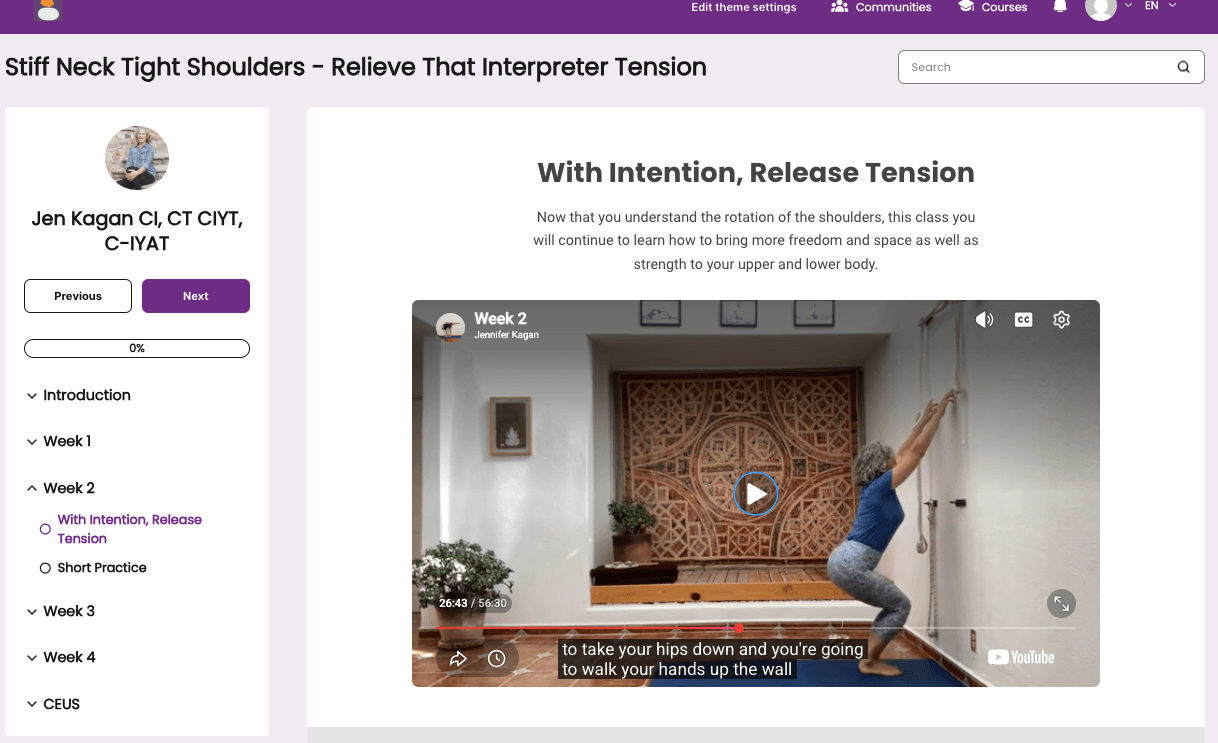
4 in-depth instructional classes: Recorded live so you feel like you are in a live class.
5 short 15-minute practices
Weekly email support: for accountability and guidance
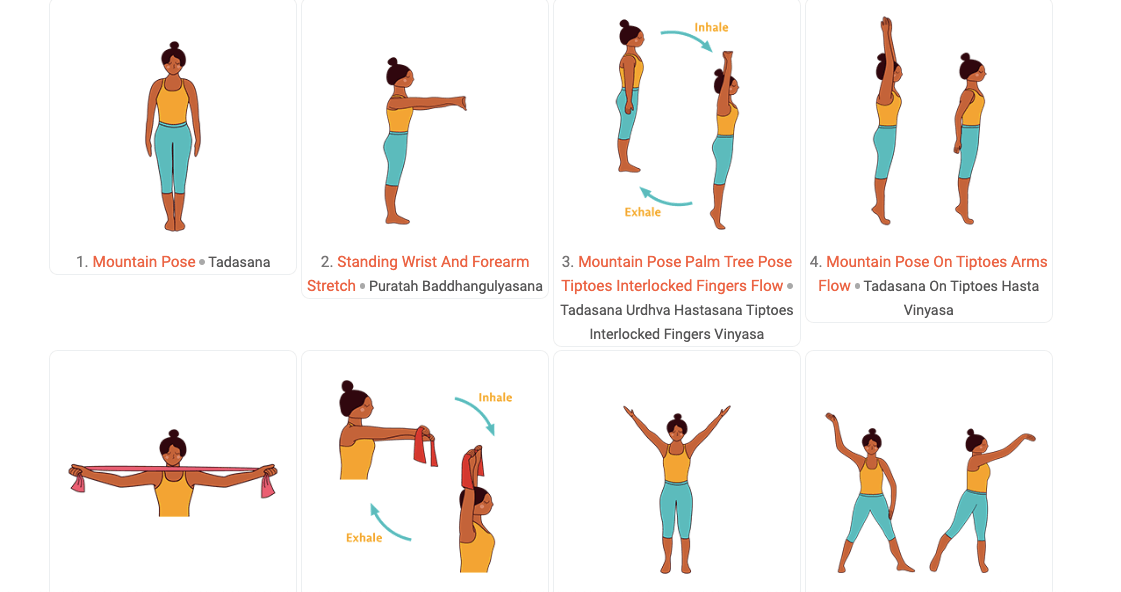
4 downloadable sequences: So you don't have to remember everything or search for a video every time you want to practice.
Access to private FB Group: Ask questions, share your progress, and stay connected as you move through the program.
Lifetime access
.6 GS CEUs: $10 fee
Plus you get
BONUS: Shoulder Relief Practice
A gentle guided video to release tension and create more freedom through your shoulders and upper back.
BONUS: Downward Dog Without Wrist or Shoulder Strain
Learn Downward-Facing Dog with greater comfort and confidence.
BONUS: Your First Steps Toward Handstand
A progressive tutorial to help you build the strength, alignment, and confidence needed to begin learning Handstand safely.
BONUS: Help for Your Hands and Wrists
A practical guide with simple ways to protect your wrists, reduce unnecessary strain, and feel more supported in weight-bearing poses.
Finally, something made specifically for interpreters.
"Finally! This is tailored to Interpreters and specific to our work, this course is tailor-made for us. Take this course!"
R. Carter
Hi I'm Jen
I have been a sign language interpreter for more than 25 years and have been teaching yoga for more than 20.
I’m a Level 3 Certified Iyengar Yoga Teacher and Certified Yoga Therapist, and importantly, I know what it feels like to spend hours with your arms raised, to finish work with tight shoulders and an aching neck, and to wonder how your body is going to keep doing this for another 10, 20 or 30 years.
I created this course because most yoga classes have no idea what interpreters actually need.
And many interpreters aren't aware of how much yoga can help them.
You deserve a practice that understands your body and helps you create a sustainble career.

I liked the community
"The 4-week course was great. I liked the Facebook group! I find that really conducive to discussions."
-Julie Donnelly.
The Investment
4 weeks of instruction
9 total practice/instructional videos
Downloadable sequences
Lifetime access
.6 CEUS ($10 fee)
Option at checkout: Private Session for personalization
Your Questions Answered
You don’t need any yoga experience to take this course. I’ll guide you step by step and help you understand not just what to do, but why we are doing it. You can move at your own pace and repeat classes as you improve and practice the shorter practices as often as you need.
This course will give you something a general yoga class probably doesn’t: a practice designed specifically around what you do as an interpreter. You’ll learn how to work with the repetitive demands of interpreting, create mobility before adding load, and improve your current practice with this understanding. There might be poses you tend to avoid that you will be able to attempt with the knowledge gained from this course.
The course is taught in spoken English with captions. If you are Deaf and want to learn yoga, please email me for offerings and/or referrals.
This course is designed for common tension and physical patterns associated with interpreting, but it is not a substitute for individualized medical care. If you have an acute or significant injury, check with your healthcare provider before beginning and contact me if you need help determining whether the course is appropriate for you..


